Top 10 Anime Plot Twists That Changed Everything
A good plot twist surprises you. A great one forces you to reconsider everything that came before it, turning a story you thought you understood into something you have to reread with completely different eyes.
This list ranks the ten anime twists that pulled off that second, much harder achievement, weighing how much of the preceding story they actually recontextualize rather than just how shocking the initial reveal felt.
10. Nami’s True Reason for Leaving (One Piece)
Early One Piece plants Nami as a thief willing to betray the crew for money, and the reveal that she’s actually been trying to buy her village’s freedom from Arlong for years transforms her from a suspicious outsider into one of the story’s most sympathetic figures almost instantly. It’s a twist that works specifically because the story never cheats: rereading her earlier scenes, her motivations were consistent all along, just misread by both the crew and the audience.
What makes it land specifically is the timing of the reveal relative to her betrayal. The story lets Luffy and the crew feel genuinely hurt by what looks like a straightforward theft before pulling back the curtain, which means the audience experiences the same emotional whiplash the crew does rather than being let in on the secret ahead of time. That structural choice is a large part of why Arlong Park is remembered as one of the series’ most effective early arcs.
9. Itachi’s Massacre Was Ordered (Naruto)
The reveal that Itachi’s slaughter of the Uchiha clan was carried out under direct orders, to prevent a coup that would have plunged the village into civil war, transforms him retroactively from the series’ most hated villain into one of its most tragic figures. Every scene involving him before this reveal reads completely differently once his actual motivations are known, which is the exact standard a great twist has to clear.
Sasuke’s entire arc, his hatred, his defection, his pursuit of power specifically to kill his brother, is built on a lie he only learns the truth of years and hundreds of chapters later. That means the twist doesn’t just recontextualize Itachi, it recontextualizes the entire second half of the series’ central rivalry, since Sasuke’s actions all along were a reaction to a version of events the story deliberately withheld from both him and the reader.
8. Aizen Was Behind Everything (Bleach)
Bleach spends dozens of early episodes establishing Aizen as a mild-mannered, trustworthy captain, quietly orchestrating conflicts from behind a faked death long before his true nature is revealed. The twist forces a complete reread of the series’ early arcs, since numerous seemingly unconnected events turn out to have been steps in his long game all along.
What sets this reveal apart from a simple hidden-villain twist is how completely it reframes the story’s sense of who was in control. Characters the audience had been led to trust as allies or neutral figures turn out to have been pieces on Aizen’s board for years, which means nearly every prior conflict in Bleach’s Soul Society arc has to be reevaluated once his true role becomes clear.
7. Shanks Gave Luffy His Hat for a Reason (One Piece)
What initially reads as a simple, heartwarming gift from a beloved mentor figure takes on considerably more weight once the full scope of Shanks’s own history and standing in the world becomes clear much later in the story. The straw hat itself becomes a recurring symbol loaded with meaning that early chapters couldn’t have signaled without giving away information the story wasn’t ready to reveal yet.
Shanks’s own status among the world’s most powerful pirates only becomes fully clear many arcs later, and once it does, his casual, easy generosity toward a random village boy at the start of the story reads as a far more significant gesture than a simple mentor moment. The hat becomes a symbol not just of a promise between two people, but of a genuine vote of confidence from one of the most powerful figures in the entire world.
6. Light Yagami Is the Villain (Death Note)
Death Note’s core twist isn’t a single reveal so much as a slow, deliberate reframing: the protagonist audiences initially root for as a vigilante delivering justice gradually reveals himself, through his own actions rather than a dramatic announcement, to be the story’s actual villain. It’s a twist built entirely on the audience’s own assumptions about protagonist morality, which makes it uniquely uncomfortable compared to a more conventional reveal.
The show’s structure reinforces this deliberately by giving nearly equal narrative weight to L’s investigation, letting viewers root for the detective hunting Light down as much as they’d initially rooted for Light himself. That dual sympathy, built by design rather than accident, is exactly what makes rewatching the early episodes such a different experience once Light’s full nature is impossible to ignore.
5. Eren Yeager Was the Attack Titan All Along, and the Real Enemy Was Never Who It Seemed (Attack on Titan)
Attack on Titan builds an entire mystery around the nature of the Titans and the walls protecting humanity, and its central twists, the truth about Eren’s own Titan powers, the reveal of what lies beyond the walls, and eventually the reversal of who the story’s actual villains are, systematically dismantle every assumption established in the opening season. Very few series commit this thoroughly to recontextualizing their own premise multiple times across a single run.
Perhaps the most disorienting part of this ongoing recontextualization is how the story handles sympathy. Characters introduced as straightforward enemies threatening humanity behind the walls turn out to have their own entire civilization, history, and legitimate grievances, and the story refuses to let the audience settle comfortably into rooting for one clear side. That sustained moral discomfort, rather than any single reveal, is arguably the series’ most significant twist of all.
4. Itachi Was Already Dying (Naruto)
Layered on top of the massacre reveal, the additional discovery that Itachi was terminally ill during his final fight with Sasuke, and chose to lose deliberately rather than fight to win, adds an entire further dimension to a character already reframed once. It’s a twist within a twist, each layer making the character’s sacrifice more complete than the one before it.
The detail lands harder because of how it was withheld: Itachi himself never mentions his illness to Sasuke, choosing to let his brother believe he’d lost rather than reveal he was already dying. That choice, prioritizing Sasuke’s need to feel he’d earned a real victory over his own desire for a cleaner goodbye, is precisely the kind of quiet, selfless detail that turned this character from the fandom’s most hated figure into one of its most beloved.
3. The Entire War Was to Revive Kaguya (Naruto)
The reveal that Madara’s entire plan, and by extension the Fourth Great Ninja War itself, was secretly Black Zetsu’s long-game scheme to resurrect Kaguya Otsutsuki recontextualizes hundreds of chapters of buildup around Madara as the ultimate threat. He turns out to have been a tool the whole time, which is a rare thing for a story to do to its own primary antagonist this late into its run.
Black Zetsu’s own patience across this scheme is staggering once laid out plainly: manipulating the Uchiha clan across countless generations, authoring the very stone tablet Madara built his life’s plan around, and quietly steering the entire ninja world’s history toward one specific moment. Rereading the series with that knowledge turns background details in early arcs, ones that seemed like simple worldbuilding at the time, into evidence of a scheme that had been running since long before Naruto himself was born.
2. Frieren Has Been Grieving the Entire Time (Frieren: Beyond Journey’s End)
Frieren’s premise, an elf who barely processed the death of her human companions during their original adventure because elven lifespans made human mortality feel abstract to her, quietly recontextualizes as the story continues: her entire subsequent journey is revealed to be a slow, decades-delayed reckoning with grief she didn’t know how to feel at the time. It’s an unusually quiet, emotionally driven twist compared to most entries on this list, and it’s exactly why the series has been so widely praised for its emotional maturity.
What makes this twist unusual is that it isn’t delivered through a single dramatic reveal scene at all. It accumulates gradually, through small moments where Frieren reacts to reminders of her old party in ways that only make sense once the audience understands how much unprocessed grief she’s carrying. That slow-burn structure mirrors real grief far more honestly than a single tearful confession scene would, which is a large part of why the series has resonated so strongly with viewers.
The Kaguya reveal is the one entry here that divides readers on exactly this point, since a share of the audience feels it makes the preceding Madara material worse rather than better. It is ranked highly for scope, with that objection noted.
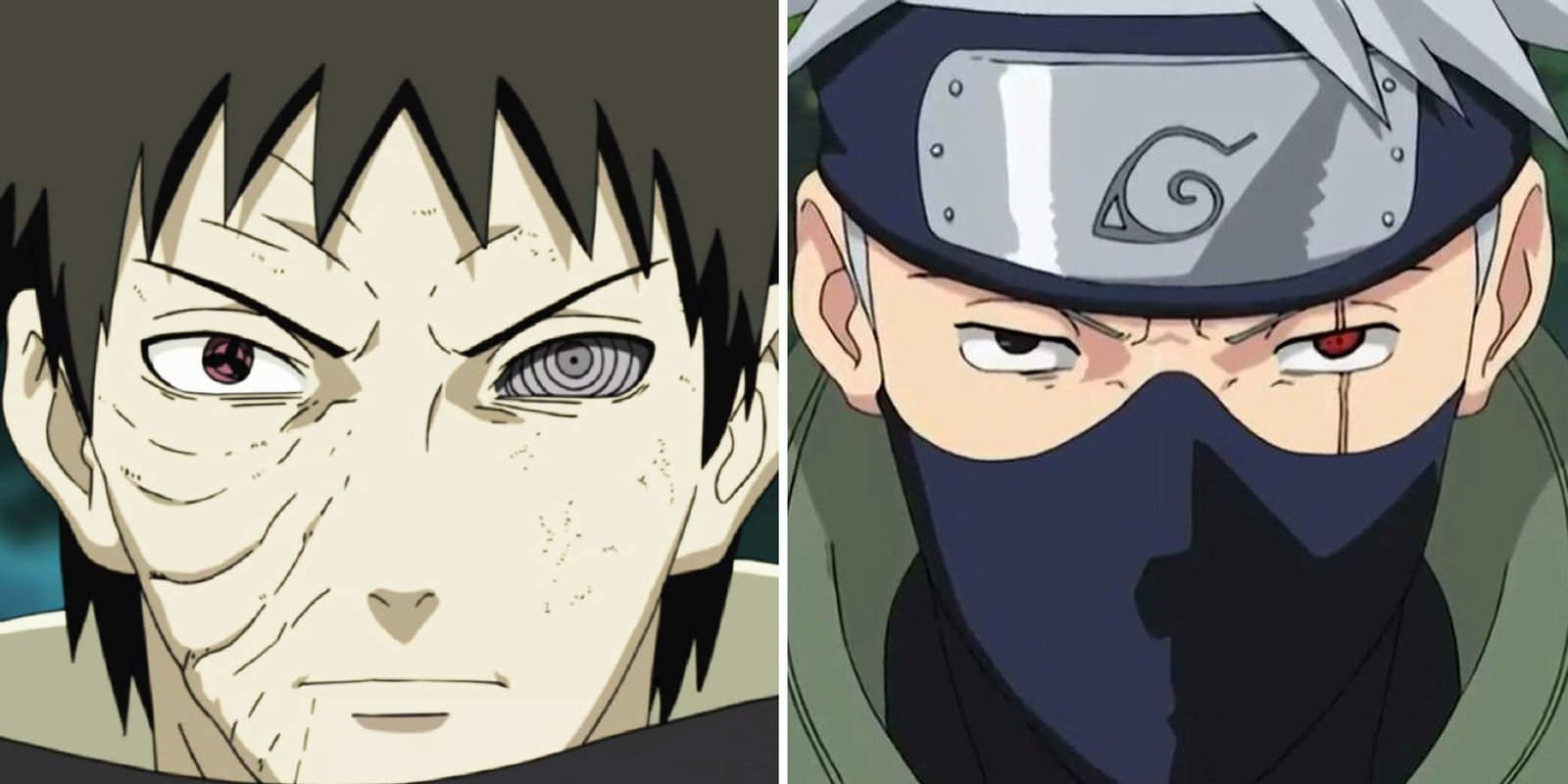
1. Tobi Is Obito (Naruto)
Few reveals in the medium retroactively reshape as much story as this one does. The masked, joking Akatsuki member who spends years posing as Madara Uchiha turns out to be Obito, Kakashi’s long-presumed-dead teammate, and the reveal recontextualizes Kakashi’s entire backstory, Rin’s death, the origin of the Nine-Tails’ attack on Konoha, and the true architect behind the Akatsuki all at once.
Very few single reveals connect that many separate plot threads into one coherent explanation without feeling like a retcon bolted on after the fact, which is exactly why this twist remains a frequent reference point whenever fans discuss long-form plotting done well.
Part of what makes it the single best twist on this list is how long the series held the fandom’s speculation at bay. For years before this reveal, the single biggest running fan theory was that Tobi was Madara exactly as he claimed, and the story actively encouraged that theory through misdirection rather than correcting it outright. Landing a reveal this significant against a wall of accumulated fan speculation built up over real years of weekly releases is a different, harder achievement than surprising an audience reading a story all at once.
Why these twists survive a reread
The test that separates the entries above from a merely surprising reveal is whether the story holds together better or worse once you know the answer.
A cheap twist makes earlier chapters worse, because scenes that made sense before now contain characters behaving in ways the reveal cannot explain. A strong one makes them better, because behavior that read as odd or unmotivated suddenly has a reason.
Obito’s mask, Aizen’s mild manner, and Nami’s apparent betrayal all pass that test. Nothing in the earlier material has to be excused or ignored, and a second pass through those chapters is a different and richer experience than the first.
One more marker separates the strongest entries here: the reveal answers a question the audience had already been asking on its own, rather than one the story has to raise and resolve in the same breath. Obito, Aizen and Light all clear that bar comfortably.
A few more worth knowing
A few more twists deserve recognition even outside the numbered ten.
- Shigaraki is All For One’s chosen successor (My Hero Academia) recontextualizes the villain’s entire arc retroactively.
- Father’s true nature and goals (Fullmetal Alchemist: Brotherhood) reframe the entire alchemical system the story is built around.
- Ging Freecss’s involvement (Hunter x Hunter) unfolds slowly, revealing how far Gon’s absent father has been quietly steering events all along. It rewards attentive readers who caught the earlier hints scattered through the story’s first arcs.
What separates a twist from a surprise
A surprise startles you once. A twist changes what every earlier chapter meant, and only the second kind was eligible here. This list favors twists that fundamentally change how earlier material reads on a reread over ones that were simply unexpected in the moment, which is why a few shocking but narratively self-contained twists from other franchises didn’t make the numbered ten.
Common questions
What is the biggest plot twist in anime?
Tobi being revealed as Obito Uchiha in Naruto tops this list, because of how much earlier material it reframes at once: Kakashi’s backstory, Rin’s death, the Nine-Tails attack, and the Akatsuki’s true leadership.
What makes a plot twist good?
Whether the story reads better afterward. A weak twist makes earlier chapters worse, because behaviour that made sense before now needs excusing. A strong one explains behaviour that previously seemed odd.
Does Attack on Titan have the best twists?
It has the most sustained ones. Rather than a single reveal, it systematically dismantles nearly every assumption from its opening season, including who the actual villains are.
Is the Kaguya reveal a good twist?
It divides readers, and this list ranks it highly for scope while noting that objection. Some feel it retroactively weakens the Madara buildup rather than enriching it, which is a fair reading.


