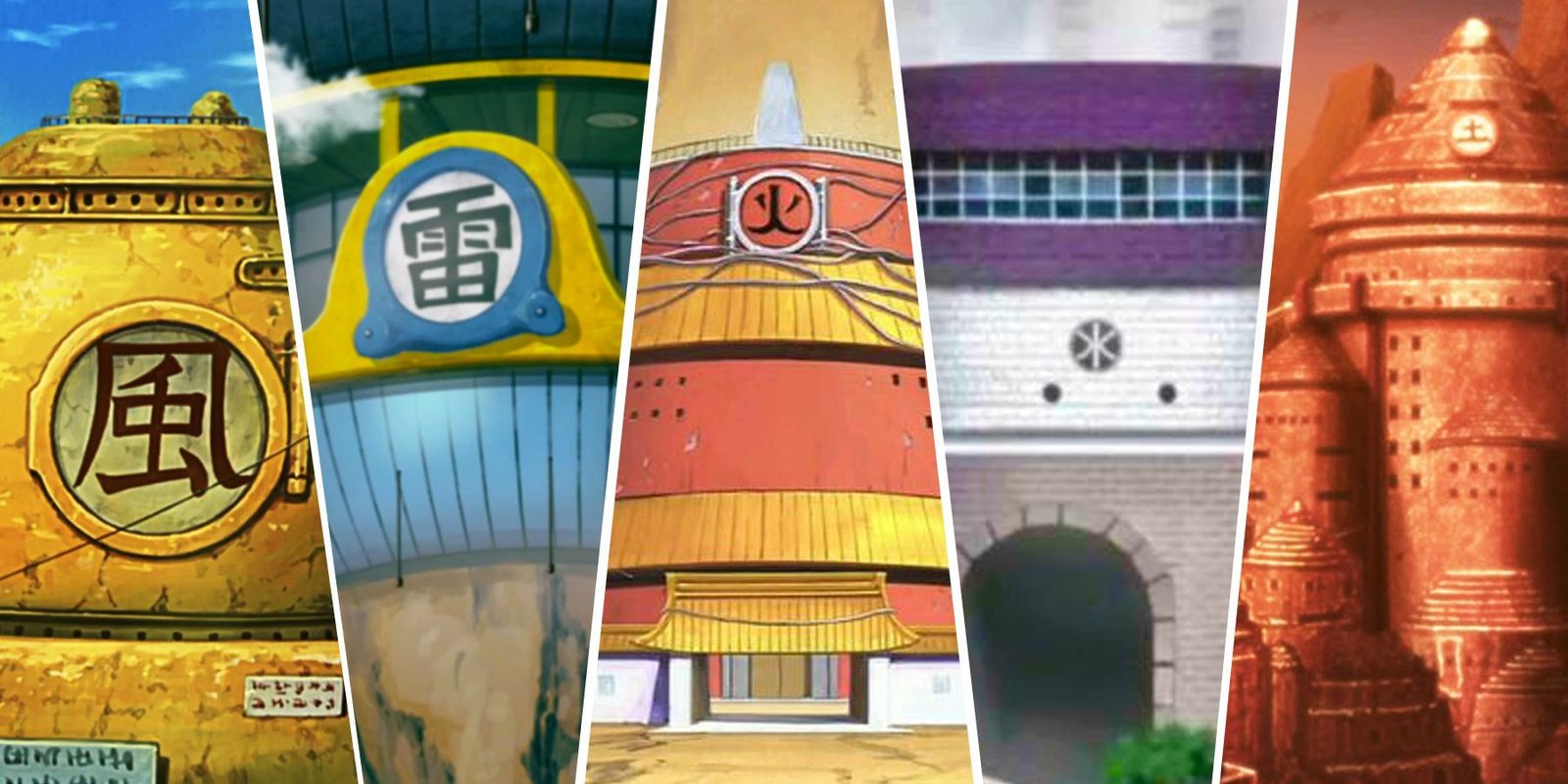
All the Villages in Naruto: The Five Great Nations and the Minor Ones Everyone Skips
| Village | Country | Leader |
|---|---|---|
| Konohagakure | Land of Fire | Hokage |
| Sunagakure | Land of Wind | Kazekage |
| Kirigakure | Land of Water | Mizukage |
| Kumogakure | Land of Lightning | Raikage |
| Iwagakure | Land of Earth | Tsuchikage |
| Amegakure | Land of Rain | Self-governed, no formal Kage title |
| Otogakure | None | Founded and run by Orochimaru |
| Uzushiogakure | Land of Whirlpools | Destroyed before the series |
Every village in Naruto belongs to a country, and it’s worth being precise about the difference: the country is the nation, the Land of Fire, and the village is the settlement inside it, Konohagakure. Mixing the two up is the single most common mistake in writing about this subject.
The five great villages
Konohagakure, the Hidden Leaf, sits in the Land of Fire and is led by the Hokage. It’s the series’ home base and where most of the main cast comes from, and its central role in the story tends to make readers assume every other village is a smaller version of the same thing, which isn’t really true once you look closer.
Sunagakure, the Hidden Sand, sits in the Land of Wind and is led by the Kazekage. It’s chronically underfunded compared to the other great villages, which is an actual plot point in the story rather than just background detail, tied directly into why Gaara was raised the way he was, and it’s home to Gaara and Temari.
Kirigakure, the Hidden Mist, sits in the Land of Water and is led by the Mizukage. Known historically as the Bloody Mist for the brutality of its old graduation practices, where students were once forced to fight each other, and home to the Seven Swordsmen of the Mist, including Zabuza.
Kumogakure, the Hidden Cloud, sits in the Land of Lightning and is led by the Raikage. Home to Killer B and the Eight-Tails, and generally depicted as one of the more militarily aggressive of the five great villages in its earlier history.
Iwagakure, the Hidden Stone, sits in the Land of Earth and is led by the Tsuchikage. It carries a long-standing rivalry with Konoha, rooted in past wars between the two nations that predate the main story.
The minor villages, where this gets interesting
Amegakure, the Hidden Rain, sits in the Land of Rain. This is Nagato’s home village and the Akatsuki‘s base of operations, and it’s arguably the most important minor village in the entire series. It’s a war-torn buffer state that the great villages repeatedly fought over, and that history of being caught between larger powers is the direct cause of the Akatsuki’s existence.
Otogakure, the Hidden Sound, was founded by Orochimaru as a personal operation rather than a genuine, established village in the way the others are. Worth keeping that distinction clear, since it functions more as a base for his experiments than a real settlement with its own culture or population.
Takigakure, the Hidden Waterfall, is home to Fu and the Seven-Tails, and like several of the smaller villages, it exists largely in the story’s orbit rather than at its center.
Kusagakure, the Hidden Grass, appears at various points across the series, generally as a smaller power caught between the interests of the larger nations around it.
Yugakure, the Hidden Hot Water, has a genuinely funny history: it abandoned being a ninja village entirely and reinvented itself as a resort town, trading its shinobi identity for hot spring tourism. It’s also Hidan’s home village.
Hoshigakure, the Hidden Star, was built around a meteorite used for a training technique that was, unknown to its users, slowly killing them.
Getsugakure, the Hidden Moon, and Shimogakure, the Hidden Frost, both appear in the series as smaller villages with limited screen time, rarely getting more than a passing mention or a single arc’s worth of relevance.
Uzushiogakure, the Hidden Eddy, sits in the Land of Whirlpools and was destroyed before the story begins. This one deserves real attention: it was home to the Uzumaki clan, master sealers, and it’s the reason the spiral crest appears on the back of every Konoha flak jacket, a permanent visual reminder of the alliance between the two. It’s also directly tied to Naruto’s own heritage, since Kushina, his mother, came from this village before its destruction.
A note on accuracy here: some of the smaller villages appearing across the wider franchise only exist in filler episodes or movies rather than the manga itself, so if you’re trying to track down a specific village’s canon status, it’s worth checking whether the version you encountered it in was the main story or an anime-original arc.
Why the great villages ended up as exactly five
The number five isn’t arbitrary. The five great villages correspond to the five major elemental nations that emerged as dominant military powers after centuries of conflict, each built around access to a specific set of resources and, eventually, a jinchuriki housing one of the tailed beasts. That concentration of both military and supernatural power is what separates a great village from a minor one in practice, regardless of a minor village’s history or culture. Amegakure, for instance, is arguably more narratively important than some of the great villages, but it never had the resources or the jinchuriki backing to be classified alongside them.
Which village was strongest when
The series doesn’t rank its villages outright, and any list claiming to is interpretation rather than stated fact. That said, it’s fair to say the balance of power shifts across the story: the five great villages hold rough parity for most of the series, with the Land of Fire generally regarded as having a slight edge due to Konoha’s central role and resources, while smaller villages like Amegakure and Otogakure operate more as wildcards outside the formal power structure entirely.
Common questions
How many hidden villages are there in Naruto?
Five great hidden villages, plus a longer tail of minor ones. The five are Konohagakure, Sunagakure, Kirigakure, Kumogakure, and Iwagakure. Beyond those sit Amegakure, Otogakure, Takigakure, Kusagakure, Yugakure, Hoshigakure, Getsugakure, Shimogakure, and the destroyed Uzushiogakure.
What is the difference between a country and a village?
The country is the nation and the village is the settlement inside it. The Land of Fire is the country; Konohagakure is the hidden village within it. Mixing the two up is the single most common error in writing about this subject.
Which is the strongest village?
The series never ranks them outright, so any confident ordering is interpretation. The five great villages hold rough parity for most of the story, with Konoha generally regarded as having a slight edge because of its central role and resources.
Are all the villages canon?
Not all of them. Several smaller villages appear only in filler episodes, films, or light novels rather than in the manga. If you are tracking canon status for a specific village, check which format you encountered it in first.


