Is Tanjiro Related to Kokushibo? What the Manga Actually Shows
No. There’s no blood relationship between Tanjiro and Kokushibo.
Kokushibo is Michikatsu Tsugikuni, the twin brother of Yoriichi Tsugikuni. Tanjiro is a Kamado. He isn’t descended from either twin.
What actually connects them is inheritance, not blood. Generations before Tanjiro was born, Yoriichi saved Sumiyoshi, an ancestor of the Kamado family, and his pregnant wife from a demon attack. Grateful, Sumiyoshi struck up a friendship with him, and after watching Yoriichi perform Sun Breathing just once, memorized the movements through sheer observation and passed them down as a ritual dance meant to honor the fire god, the Hinokami Kagura.
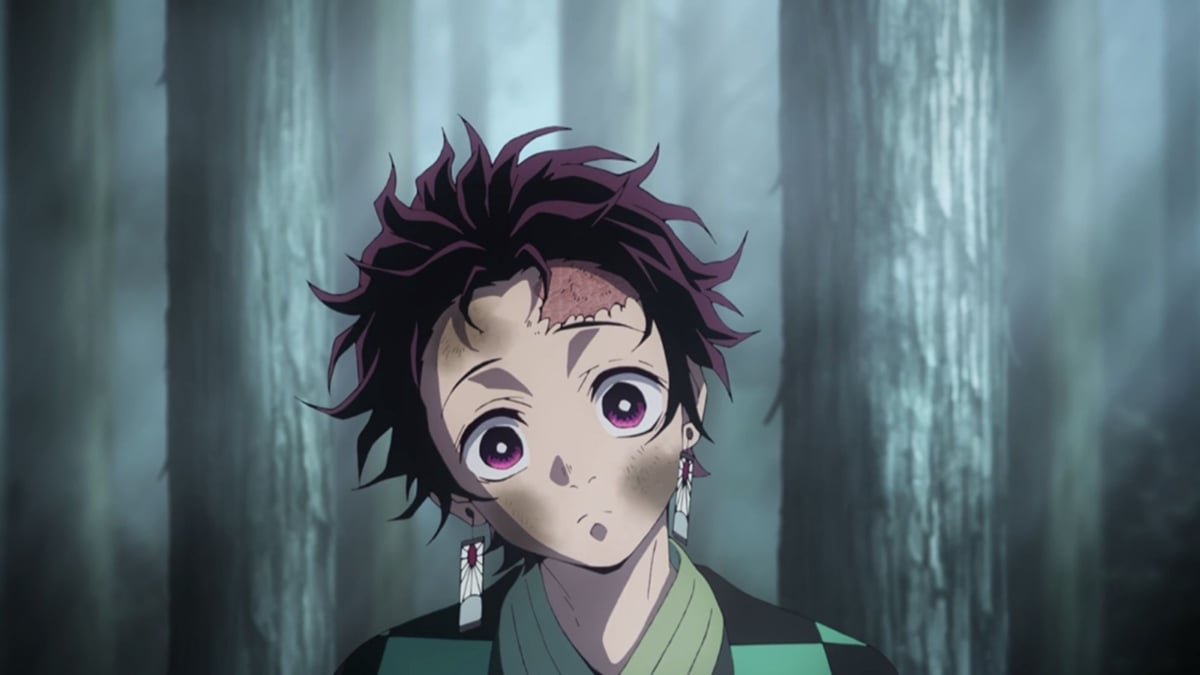
Before parting ways, Yoriichi gave Sumiyoshi his hanafuda earrings as a farewell gift. Both the dance and the earrings were passed down the Kamado line from that point forward. Tanjiro carries Yoriichi’s legacy without carrying his blood. That’s the whole distinction, and it’s why the theory persists even though it isn’t true.
Why people believe it anyway
The theory keeps coming back because there are real, visible reasons for it. Each one is worth taking seriously rather than dismissing outright.
Tanjiro has a mark on his forehead, originally a burn scar, that later becomes his Demon Slayer Mark, and it resembles Yoriichi’s own birthmark. It’s an easy visual to reason backwards from: matching marks, must be a shared bloodline. In reality, the Demon Slayer Mark appears on slayers who meet certain conditions in the story regardless of bloodline, and Tanjiro’s existing scar happens to sit exactly where the mark forms.
Worth knowing, since it touches this same mark: the manga states that anyone who awakens it dies before turning 25, with Yoriichi as the one confirmed exception, having lived to 80. That’s a bloodline-independent rule, not a hereditary one, which undercuts the “matching marks mean matching blood” reasoning on its own terms.
Then there’s the breathing style itself. Sun Breathing looks like it should be an inherited bloodline power, the kind of thing that only makes sense if you’re descended from its creator. It isn’t. It’s a taught technique, preserved inside the Kamado family as a dance passed down through generations rather than something in Tanjiro’s blood.
The earrings add to the confusion too. A physical object handed down from Yoriichi to the Kamados reads exactly like a family heirloom passed within one bloodline, which makes the assumption understandable even though it’s wrong.
Tanjiro’s resemblance to Yoriichi is another factor. This is a deliberate choice by the author, meant thematically rather than as a genetic clue, a visual echo rather than proof of lineage.
And Kokushibo’s own reaction seals the confusion for a lot of readers. He clearly recognizes both the Sun Breathing and the mark when he encounters Tanjiro, and that recognition is about his brother and what Tanjiro represents, not about a family connection to Tanjiro himself.
What they actually share
Tanjiro and Yoriichi share a legacy, not a lineage. Sumiyoshi learned from Yoriichi generations before Tanjiro was born, and what got passed down through the Kamado family from there was knowledge and objects, not blood.
That’s a stronger and stranger connection than a straightforward family tree would be. A stranger’s teaching, kept alive inside one ordinary family for generations, showing up again at exactly the right moment, centuries later, in the one person who could finally use it to end what Yoriichi started.
What Kokushibo knows when he meets Tanjiro
Kokushibo’s reaction is worth unpacking a little further, since it’s the moment that convinces a lot of viewers there must be a family tie. When Kokushibo sees Tanjiro use Sun Breathing, he immediately recognizes the technique for what it is, something only his brother ever mastered in its complete form. He doesn’t mistake Tanjiro for a relative of Yoriichi’s. What unsettles him is that a technique he assumed had died with his twin centuries earlier is somehow still alive, in a stranger, generations later.
That reaction argues against a blood connection rather than for one. If Kokushibo believed Tanjiro were literally descended from Yoriichi, the technique showing up wouldn’t be nearly as unsettling to him, since an inherited bloodline power reappearing in a descendant would make straightforward sense. Instead, what visibly rattles him is the idea that his brother’s exact skill somehow survived and was rebuilt from nothing but observation and generations of careful teaching, which is a stranger and in some ways more unnerving possibility than a hidden relative.
The simplest way to remember it
If one line is going to stick, make it this one: Tanjiro inherited Yoriichi’s belongings and Yoriichi’s technique, and Kokushibo inherited Yoriichi’s blood. The resemblance everyone notices runs through the first two, not the third.
Why the distinction matters to the story
It would have been the easier, more conventional choice to make Tanjiro a literal descendant of Yoriichi. Plenty of shonen stories lean on a hidden bloodline to explain why the protagonist happens to be capable of something extraordinary. Kimetsu no Yaiba deliberately avoids that shortcut.
Tanjiro inherits a technique and an object, not a genetic gift, which means his connection to Yoriichi is built on choice and circumstance rather than destiny. Sumiyoshi chose to learn and preserve what he saw. Every Kamado after him chose to keep passing it down as a dance nobody outside the family fully understood the meaning of. Tanjiro himself has to choose to become a demon slayer at all. None of it was guaranteed by blood, and that’s precisely the point the story is making by keeping the two families unrelated.
Common questions
Is Tanjiro a descendant of Yoriichi?
No. Yoriichi had no surviving line through the Kamado family. What passed down to Tanjiro was a taught technique and a physical object, not blood, which is precisely the distinction this page is about.
Why does Tanjiro look like Yoriichi then?
The resemblance is an authorial choice made for thematic effect rather than a genetic clue. The story pairs it with the forehead mark and the inherited earrings, and those three visual echoes together are why the bloodline theory keeps resurfacing despite being wrong.
Is Tanjiro related to Muzan?
No. There is no family connection between the Kamado family and Muzan Kibutsuji at all. Muzan’s interest in them is entirely about recognising Yoriichi’s earrings on Tanjuro, not about any shared lineage.
Does Kokushibo recognise Tanjiro when they fight?
He recognises the Sun Breathing and the mark, both of which he associates with his brother. What unsettles him is that a technique he believed died with Yoriichi centuries earlier is alive in a stranger, which argues against a blood relationship rather than for one.


