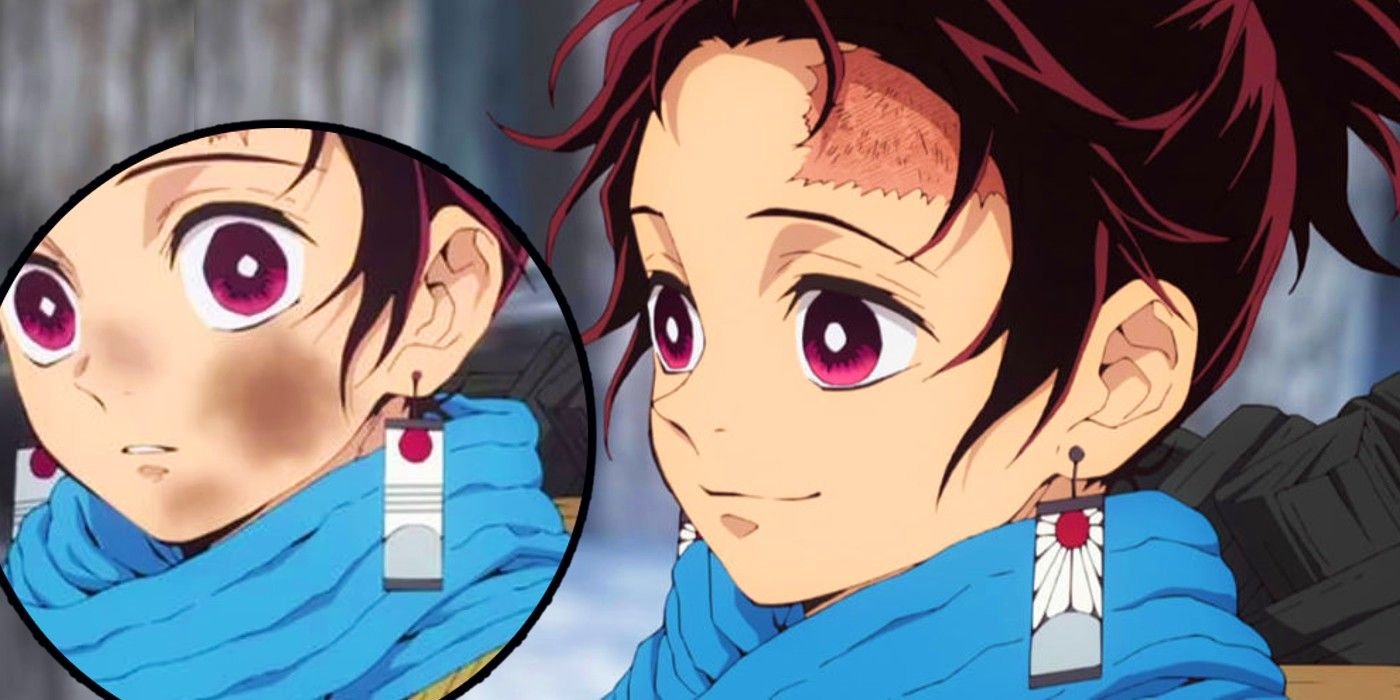
Tanjiro’s Hanafuda Earrings: The Real Story Behind Demon Slayer’s Most Recognizable Accessory
Tanjiro’s earrings are called hanafuda earrings, named after the traditional Japanese playing cards whose patterned designs they resemble. He inherited them from his father, Tanjuro Kamado, passed down through the Kamado family alongside the Hinokami Kagura, the fire god dance.
Here’s the part that turns a piece of jewelry into one of the most important objects in the entire series. The earrings originally belonged to Yoriichi Tsugikuni, the strongest demon slayer who ever lived, and the only person to ever bring Muzan to the brink of death.
When Muzan sees Tanjiro’s father wearing them, he recognizes them instantly from that fight centuries earlier. That recognition is the reason Muzan attacks the Kamado family. The earrings aren’t just a design choice. They’re the reason Tanjiro’s family died.
What hanafuda cards actually are
Hanafuda are a traditional Japanese playing card deck, each card decorated with seasonal flower and nature imagery. The earrings echo that decorative style, which is part of why they look distinct from typical jewelry, more like a small painted card than a standard stud or hoop.
The deck itself has centuries of history in Japan, used for a range of traditional games long before Demon Slayer existed. Choosing that specific design language for Yoriichi’s earrings, rather than a generic ornament, ties the object to something culturally rooted rather than invented purely for the story.
How the earrings actually get passed down
The chain of ownership matters as much as the design. Yoriichi gives the earrings away as a farewell gift to Sumiyoshi, an ancestor of the Kamado family, generations before Tanjiro is even born, after Sumiyoshi and his pregnant wife are saved from a demon attack. Sumiyoshi also watches Yoriichi perform Sun Breathing exactly once, and memorizes the movements well enough to turn them into the Hinokami Kagura, the ritual dance passed down through the Kamado family as a way of honoring the fire god.
From that point on, both the earrings and the dance travel down the same family line together, generation after generation, until they reach Tanjuro and eventually Tanjiro himself. Neither one means anything alone. Together, they’re the reason a demon slayer’s legacy survives for centuries inside an ordinary charcoal-selling family that has no idea what they’re carrying.
The design change, and what it means for buying merch
The original earring design in the series shows red sun rays radiating from a red circle, a pattern that closely resembles imagery associated with the Imperial Japanese rising sun flag, a symbol with a painful history across parts of Asia, particularly Korea and China.
Following concern raised specifically around the South Korean release of Demon Slayer the Movie: Mugen Train, streaming versions of the earrings were altered for South Korea and China to a different pattern: a red circle sitting above four horizontal blue lines, with the sunburst rays removed entirely.
This matters practically, not just historically. Depending on which release or region’s version you’re looking at, the earrings you see may not match what you remember from your original watch. If you’re buying merchandise based on the design, it’s worth checking which version a specific product is using before you buy, since both designs have circulated, and the original sunburst design is still what’s used in Japan and most releases elsewhere.
What to know if you’re buying a pair
The earrings are usually sold as a matched pair, even though Tanjiro wears one in each ear the same way. If you’re buying, material quality matters more than it seems, since cheap plated metal tarnishes fast, especially with regular wear.
One honest safety note, since a lot of buyers here are young: if these are going into actual pierced ears rather than being worn as clip-ons or displayed, cheap plated metal against a fresh or sensitive piercing is a genuinely bad idea. Worth spending a little more for hypoallergenic material, like surgical steel or titanium posts, if they’re going to be worn rather than just owned and displayed.
Where to find them
Officially licensed versions show up through the same channels as most Demon Slayer merchandise: anime specialty retailers, convention vendor floors, and the official merchandise storefronts tied to the franchise’s publishers. Unlicensed versions are everywhere else, sold cheaply on general marketplaces, and quality on those varies enormously from one seller to the next.
If accuracy to the source material matters to you, the biggest giveaway on a cheap unlicensed pair is usually the sunburst pattern itself: the ray count, spacing, and exact shade of red are easy details for a low-effort knockoff to get slightly wrong, even though the overall shape reads as “close enough” from a distance. Comparing a listing photo against a clear screenshot of the actual earrings from the show is the simplest way to check before buying, the same approach that works for spotting fakes across most anime merchandise categories.
Why this detail resonates with fans the way it does
Plenty of anime give a main character a signature accessory purely for visual branding. What sets Tanjiro’s earrings apart is that the object carries the plot rather than decorating it. The design choice, the inheritance, and the tragedy are all the same story told through one pair of earrings, which is part of why merchandise built around them sells as well as it does. Owning a pair isn’t just owning a prop, it’s owning the specific object the entire series’ inciting incident hinges on.
Common questions
Why did Tanjiro’s earrings change design?
The original sunburst pattern closely resembles imagery associated with the Imperial Japanese rising sun flag, which carries a painful history across parts of Asia. Following concern raised around the South Korean release of the Mugen Train film, streaming versions for South Korea and China were altered to a red circle above four horizontal blue lines, with the rays removed.
What do the hanafuda earrings symbolise?
Within the story they are a physical marker of inheritance. They came from Yoriichi Tsugikuni, the only demon slayer ever to bring Muzan close to death, and were passed down the Kamado family alongside the Hinokami Kagura. Muzan recognising them on Tanjiro’s father is the reason the Kamado family was attacked at all.
Are Tanjiro’s earrings the same ones Yoriichi wore?
Yes. Yoriichi gave them to Sumiyoshi, an ancestor of the Kamado family, as a farewell gift generations before Tanjiro was born, and they were handed down the family line from that point. They are the same objects rather than a replica or a family imitation of them.
Which design should I buy?
Both circulate, so check the product photos before ordering. The original sunburst design remains standard in Japan and most releases elsewhere, while the altered blue-line version appears in South Korean and Chinese releases. If accuracy to the version you watched matters to you, compare a listing photo against a screenshot from your own release.


